
The U.S. Marines and Special Operations teams understand something many businesses overlook:
Finishing the mission is not the end of the mission.
Most Companies Do Not Have a Learning Problem. They Have a Repeating Problem.
They make the same mistakes that show up in different ways.
- Poor hiring / recruiting practices.
- Ineffective onboarding.
- Retaining teammates who should be long gone.
- Inconsistent non-process driven customer experiences.
Then they call it experience.
The U.S. Marines and Special Operations teams take a different approach. After a mission, they conduct an After-Action Review, commonly called an AAR.
The purpose is not to assign blame, defend decisions, or create a lengthy report that nobody reads.
The purpose is to learn fast enough that the same mistake does not happen twice.
In business, we are usually quick to move on. We complete a client engagement, launch a product, make a new hire, finish a major meeting, or close out a difficult quarter. Then we immediately shift our attention to the next priority.
We stay busy, but we often leave the lesson behind.
A strong AAR asks four straightforward questions:
1. What was supposed to happen?
What was the plan, objective, or desired outcome? Was success clearly defined? Did everyone understand the mission, their role, and the expected result?
2. What happened?
This requires honesty. Not the polished version. Not the explanation prepared for the leadership team. What really happened? What worked? What did not? Where did the team outperform expectations, and where did execution break down?
3. Why are there differences between the plan and the outcome?
This is where real value lives. Was the strategy wrong, or was the execution inconsistent? Did we lack information, resources, ownership, communication, or accountability? Were our assumptions inaccurate? Did we recognize warning signs but fail to act?
The goal is not to find someone to blame. The goal is to identify the root cause.
4. What will we do differently next time?
An AAR should end with action. What specific behavior, process, decision, or communication needs to change? Who owns the change? When will it be implemented? How will we know it worked?
Without this decisive step, the review becomes an interesting conversation rather than an execution tool.
The strongest organizations do not rely on experience alone. They convert experience into learning and improving.
We can also look at sports teams. They consistently perform at higher levels than do most businesses. Exercise, rigorous practice, and after every play, technology rules be at the bench or on the sidelines. Real-time feedback on what just happened…………. after every set of downs in football.
Consider conducting a debrief, a 20–30 minute AAR after major sales presentations, leadership meetings, client projects, hiring decisions, company events, and quarterly priorities.
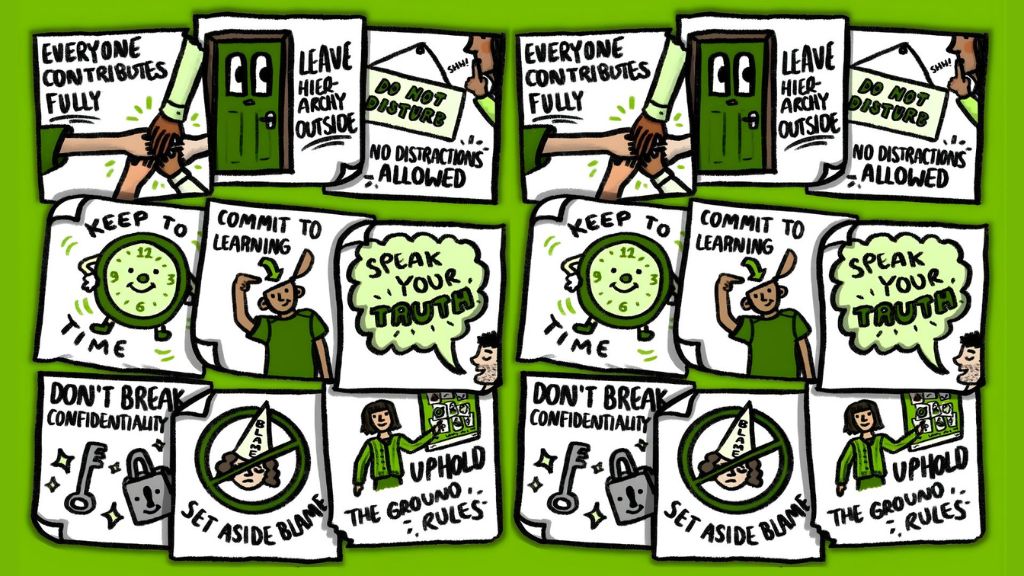
Create a safe environment where people can tell the truth without fear. Keep the discussion focused on facts, decisions, assumptions, and future improvements.
The Marines do not conduct AARs because they expect perfection. They conduct them because the cost of repeating a mistake is too high.
The same principle applies in business.
What recent meeting, project, hire, or client engagement deserves an After Action Review this week before your team moves on and repeats the same mistakes?